Where facts come from
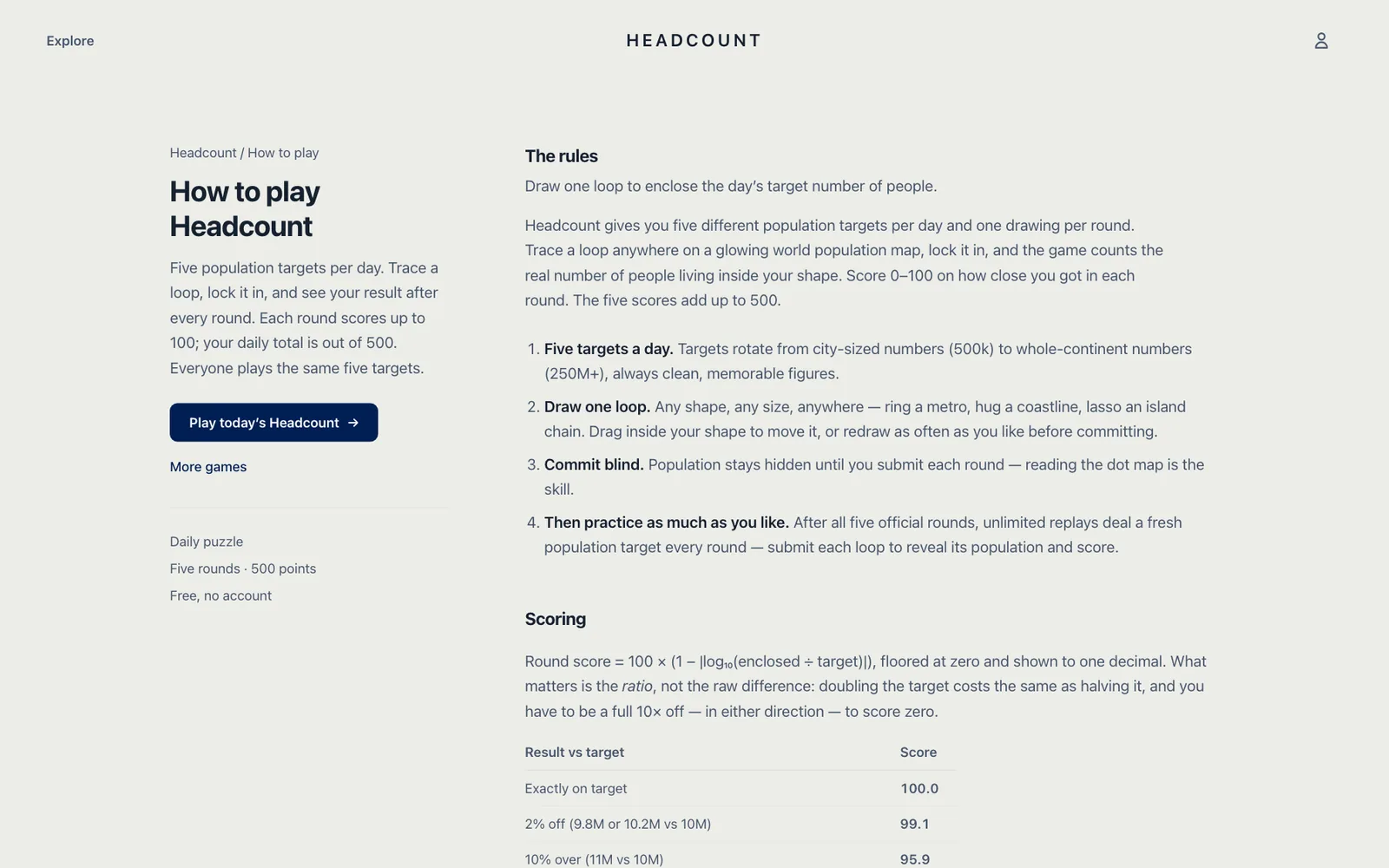
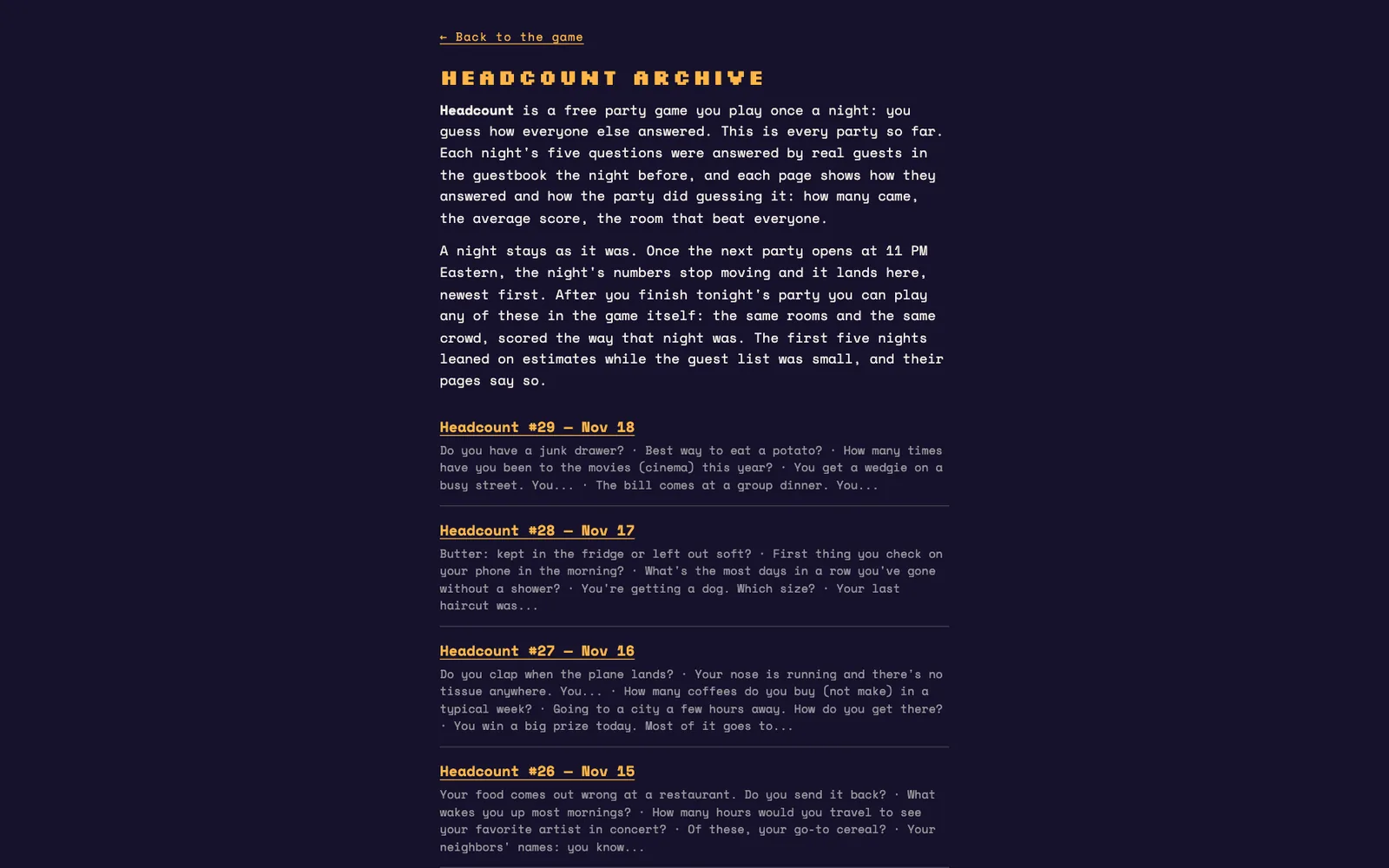
- The game’s own pages — rules, FAQ, terms, pricing, archive. These are one source, however many pages they span.
- Independent listings — game directories, app stores, Metacritic, Wikipedia, Rotten Tomatoes.
- Public video and posts — YouTube titles, descriptions and footage, public social posts and forum threads.
Status columns use plain counts such as “Official archive · 1 source” or “FlightQ + Dledex · 2 sources”.
Rules we hold ourselves to
- No invented numbers. If no source gives a value, the cell is left empty with a short reason.
- Keep disagreements. Two prices for two stores, two spellings in two references, two official examples that do not add up — all shown side by side.
- Dates on everything. Each page shows when it was last updated, and each source shows when it was checked.
- Computed, not typed. Counts, latest nights and latest days are generated from the archive data, so they cannot drift from it.
- No “today’s answers” before they exist. The party game’s answers are published only after each night closes.
Corrections
Send corrections to [email protected]. A confirmed error is fixed on the page, the check date moves, and if the change affects a number people might rely on (a price, a time, an archived answer) the page says what changed.
Tools and assistance
Drafting and data collection are assisted by software, including AI writing tools and scripts that read the public archives. Every published fact is checked against the cited source before it goes live, and the archive scripts only copy what the official pages publish.